
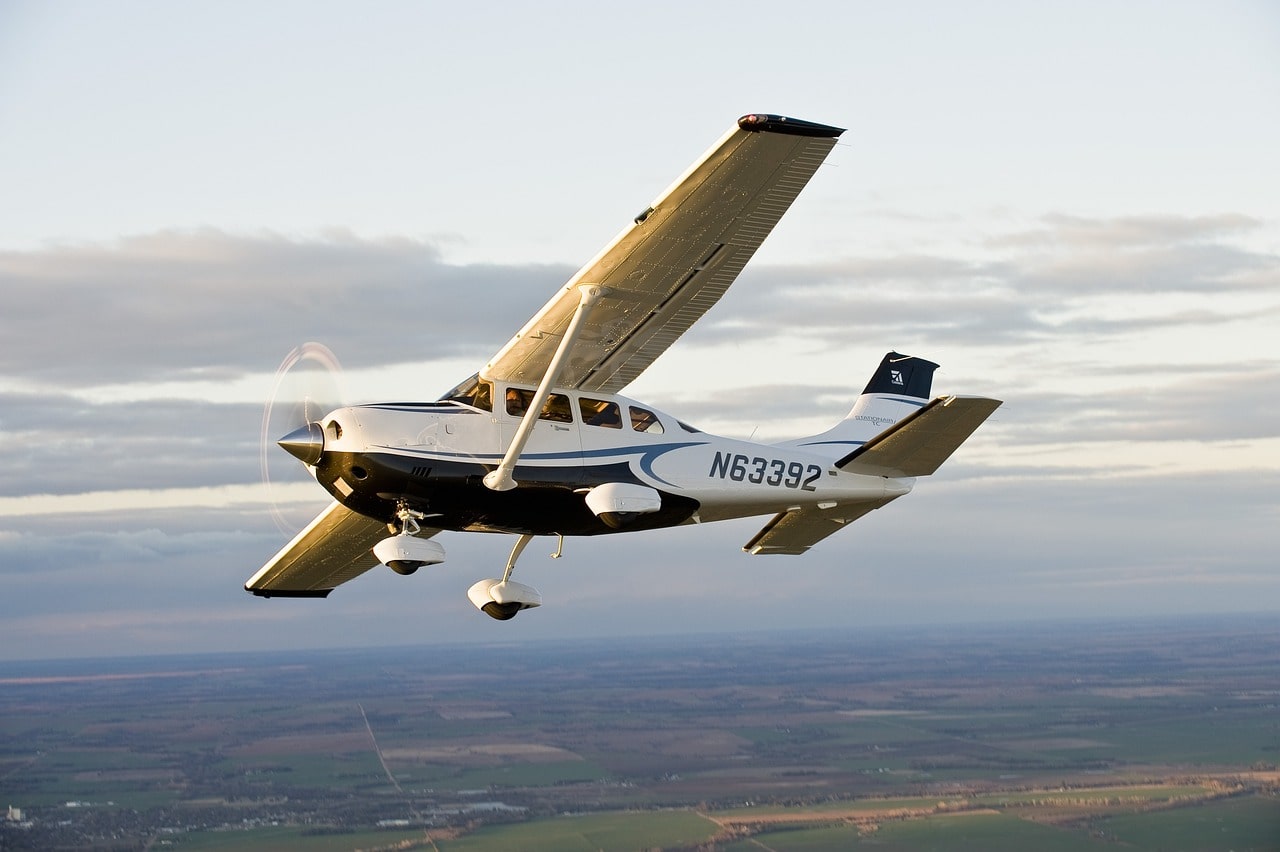
Straight to the point: commercial aircraft use Jet A-1, an aviation kerosene. Many piston aircraft use AVGAS 100LL (aviation gasoline with low lead content). In the military world you’ll see JP-5 or JP-8, kerosene-type blends tailored to their requirements. And for a few years now SAF (Sustainable Aviation Fuel) has been emerging—engine-compatible and designed to reduce the carbon footprint.
Quick summary: Jet A-1 (kerosene), AVGAS, and JP-5/JP-8.
Jet A-1 is the name you’re after for commercial flights. It’s a distillate similar to household kerosene, formulated to withstand extreme cold at high altitude (freezing point approx. −47 °C) and with a flash point around 38 °C, making it safer than gasoline. Piston aircraft burn AVGAS, the classic blue 100LL; if the engine is diesel or a small turbine, it can also use Jet A-1. In military aviation, JP-5 and JP-8 (relatives of Jet-A/Jet A-1) dominate, chosen for their performance and operational safety.
Tabla de Contenidos
ToggleJet-A vs Jet A-1 vs Jet-B: differences and uses
-
Jet A-1: standard outside the U.S. for commercial aviation; lower freezing point (better for cold/long routes).
-
Jet-A: used mainly in the U.S.; very similar spec but with a less demanding freezing point.
-
Jet-B: more volatile blend (kerosene + naphtha), used in Arctic climates for better ignition at very low temperatures.
In Europe or Latin America, when you hear “aircraft kerosene,” it almost always means Jet A-1.
What fuel do light aircraft use? (AVGAS 100LL and other grades)
Training and touring light aircraft with piston engines use aviation gasoline. The most common is AVGAS 100LL (Low Lead), dyed blue for identification. Other historical grades exist (80/87, 100/130) but are now rare. On the ramp you’ll see blue drums/nozzles for AVGAS and black/yellow for Jet A-1—never mix them: a misfuel can damage the engine. Many modern diesel light aircraft (or small turboprops) already run on Jet A-1 due to global availability.
Key properties of aviation fuel
What sets it apart from “car gasoline” isn’t the name, but how it behaves:
-
Volatility & safety: Jet A-1 has a higher flash point than gasoline → fewer flammable vapors on the ground.
-
Extreme cold: at cruise, ambient air can be −50 °C; Jet A-1 copes with a ~−47 °C freezing point.
-
Energy per kg: both Jet A-1 and AVGAS deliver lots of energy; what differs is the engine type they feed.
-
Additives: anti-icing for dissolved water, corrosion inhibitors, static control, among others.
SAF: sustainable aviation fuels and adoption
SAF (Sustainable Aviation Fuel) isn’t a “different” fuel per se, but synthetic/bio-based kerosene compatible with Jet-A/Jet A-1 when blended at approved percentages (today typically up to 50%). Airlines such as Iberia and engine manufacturers test/use SAF on specific routes to cut net emissions without changing engines or aircraft. The key is the carbon source (waste, used oils, e-fuels) and ASTM certification.
Why is fuel stored in the wings?
Three simple reasons: structure (fuel weight helps “dampen” wing loads), center of gravity (keeps the aircraft balanced), and safety (keeps most fuel away from the fuselage/cabin). Hence “wing tanks” and balance/transfer procedures.
How many liters of fuel does an aircraft carry?
It varies widely by model. A typical short/medium-haul narrow-body might carry ~15,000–24,000 L; a long-haul aircraft can exceed 150,000 L. These are order-of-magnitude figures to help visualize.
Safety and health: essentials about exposure
Jet-A/JP-8/JP-5 fuels are hydrocarbon mixtures. Prolonged exposure to vapors or extended skin contact isn’t desirable; ground operations use gloves, goggles, and adequate ventilation. Organizations like ATSDR and NIOSH publish guidance on risks and occupational limits; for the occasional passenger, exposure is minimal.
Quick comparison table
| Fuel | Base | Engines | Freezing point | Flash point | Usual color | Where you’ll see it |
|---|---|---|---|---|---|---|
| Jet A-1 | Kerosene | Turbines (commercial) | ~ −47 °C | ~ 38 °C | Pale yellow/clear | Airlines outside the U.S. |
| Jet-A | Kerosene | Turbines (commercial) | ~ −40 °C | ~ 38 °C | Pale yellow/clear | Mainly the U.S. |
| Jet-B | Kerosene + naphtha | Turbines | Very low (best in extreme cold) | More volatile | Clear | Very cold regions |
| AVGAS 100LL | Gasoline (leaded) | Piston | N/A | Low (more volatile) | Blue | Light aircraft/training |
| JP-5 / JP-8 | Kerosene (military) | Turbines | Similar to Jet-A/-A1 | Similar | Clear | Military operations |
| SAF (blend) | Bio-based/synthetic | Turbines | Same as Jet-A/-A1 (spec) | Same | Same | Blended on pilot routes |